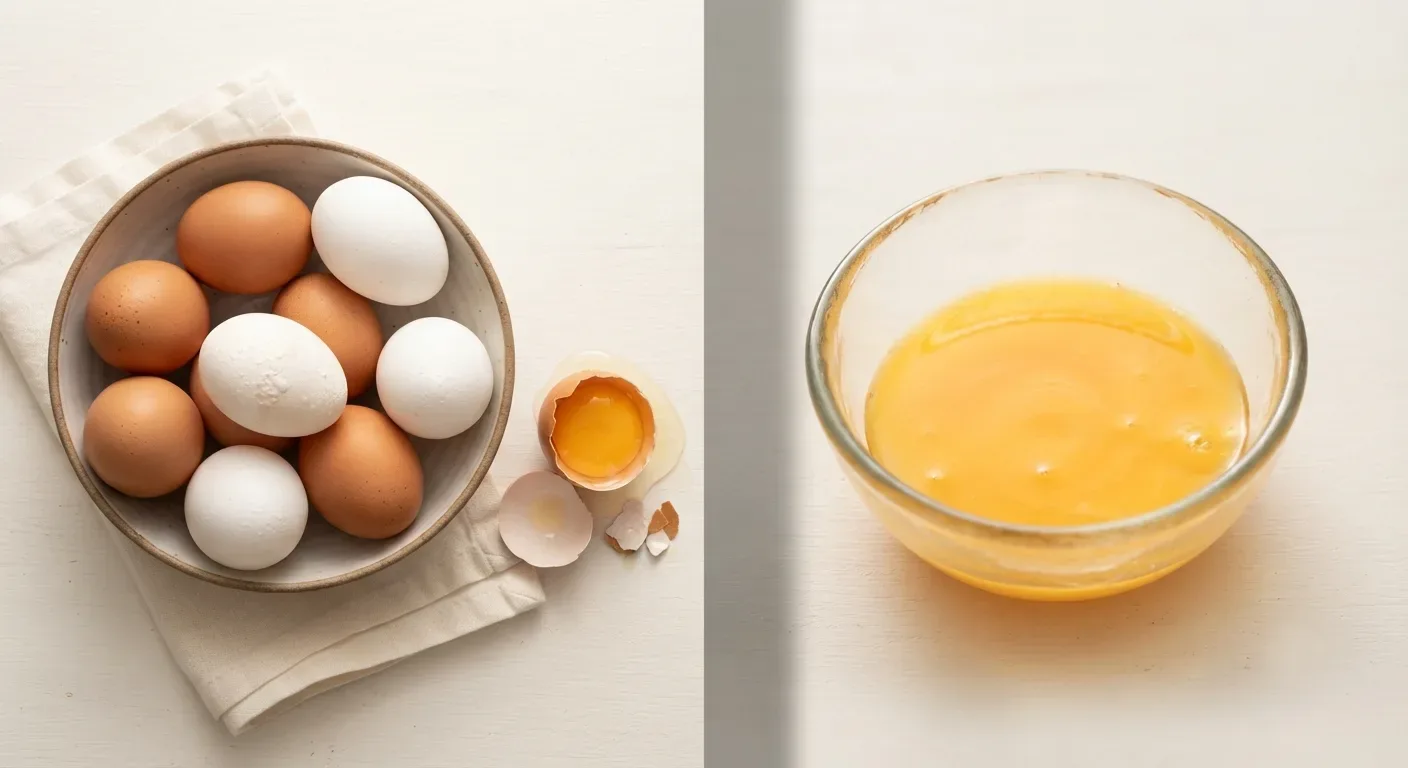
An egg is the same ingredient whichever way it arrives. The format changes how much work sits between delivery and the production line.
Shell eggs are familiar and widely used, but every one has to be cracked, and often separated, before it can be measured. Liquid eggs are supplied without the shell, as whole egg, egg white, or egg yolk, so the ingredient is ready to pour and weigh.
The differences run past convenience into storage, shelf life, portioning, consistency, transport, and which applications each format suits. Which one makes more sense depends on what you produce, how much of it, and how your operation handles eggs.
Here is how the two formats compare.
Key Takeaways
- Readiness To Use: Shell eggs are sold in their natural shell, while liquid eggs are supplied without the shell in ready-to-use formats.
- Product Versatility: Liquid eggs can be supplied as whole egg, egg white, or egg yolk based on the application.
- Prep Time: Liquid eggs reduce the cracking, separating, and preparation required before production.
- Shelf Life: Storage and shelf life differ depending on whether the egg is supplied as shell, liquid, or another processed format.
- Consistency: Liquid eggs can make portioning and batch consistency easier in commercial production.
- Use Case & Scale: Shell eggs can be practical for smaller-scale operations, while liquid eggs can support higher-volume production.
- Best Fit: The right format depends on the application, production volume, storage setup, and operational requirements.
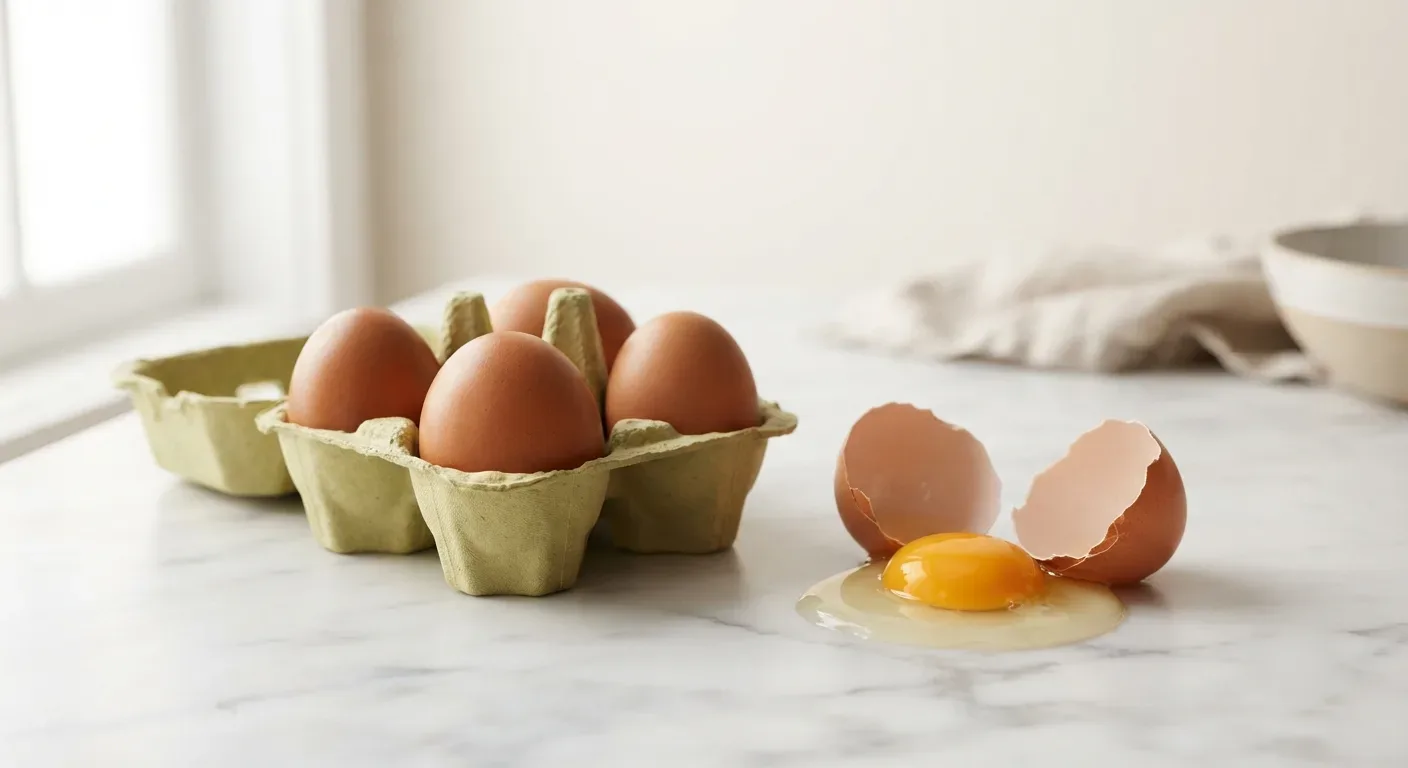
Where the Differences Show Up in Production
So, where does the difference actually matter for a food business? It shows up in almost every stage of production, from handling the egg to measuring it, storing it, and incorporating it into the final product.
Here's how the two formats compare at each stage:
| Factor | Shell Eggs | Liquid Eggs |
|---|---|---|
| Handling and Preparation | Every egg is cracked by hand, and separated when a recipe needs yolk or white | Delivered without shells, ready to pour |
| Labour | More manual preparation per batch | Fewer preparation steps |
| Portioning and Consistency | Eggs vary in size and composition, so portions need measuring | Weighed or measured by volume for the same portion in every batch |
| Egg Components | Whole egg only; yolk and white separated in the kitchen | Supplied as whole egg, yolk, or white |
| Waste | Shell waste from every egg, and shells on prep surfaces are a cross-contamination risk | No shell waste at the point of use |
| Food Safety | Salmonella can be inside the egg or on the shell; control depends on handling and refrigeration | Pasteurised before it reaches you, a requirement under FSSAI standards and US law |
| Storage | Best kept refrigerated; shelf life is short at ambient temperature | Refrigerated at 4°C (40°F) or below, or frozen, for the shelf life on the label |
| Transportation | Fragile; breakage in transit | Transported in commercial packaging without individual shells |
| Production Scale | Practical at smaller volumes; handling grows with every extra tray | Suited to standardised, higher-volume production |
The food safety and storage rows come from regulators rather than from us. The U.S. Food and Drug Administration (FDA) notes that fresh eggs with clean, uncracked shells can still carry Salmonella, and the U.S. Department of Agriculture (USDA) explains that federal law requires every liquid, frozen, or dried egg product to be pasteurised.
India's rules run the same way: the Food Safety and Standards Authority of India (FSSAI) defines a liquid egg product as pasteurised, gives shell eggs two weeks at ambient temperature or five weeks refrigerated, and holds liquid eggs at 4°C or below. Both USDA and the FDA put refrigerated storage for eggs at 40°F (4°C) or below.
There is a food safety cost to that handling as well. The UK Food Standards Agency tells caterers who crack eggs for later use to keep the pooled liquid refrigerated, use all of it the same day, and never top it up with fresh eggs. A pasteurised liquid egg product arrives with a shelf life on the label instead.
The biggest difference is not the egg itself. It is everything that happens before the egg becomes part of the product. With shell eggs, cracking and preparation are part of the production process. With liquid eggs, much of that handling has already been taken care of before the ingredient reaches the production line.
For businesses working with larger volumes, removing such additional friction can make egg handling easier to standardise and integrate into everyday production.
Which Works Better for Commercial Food Production?
There is no single answer. The right choice depends on how your business uses eggs and what the production process needs.
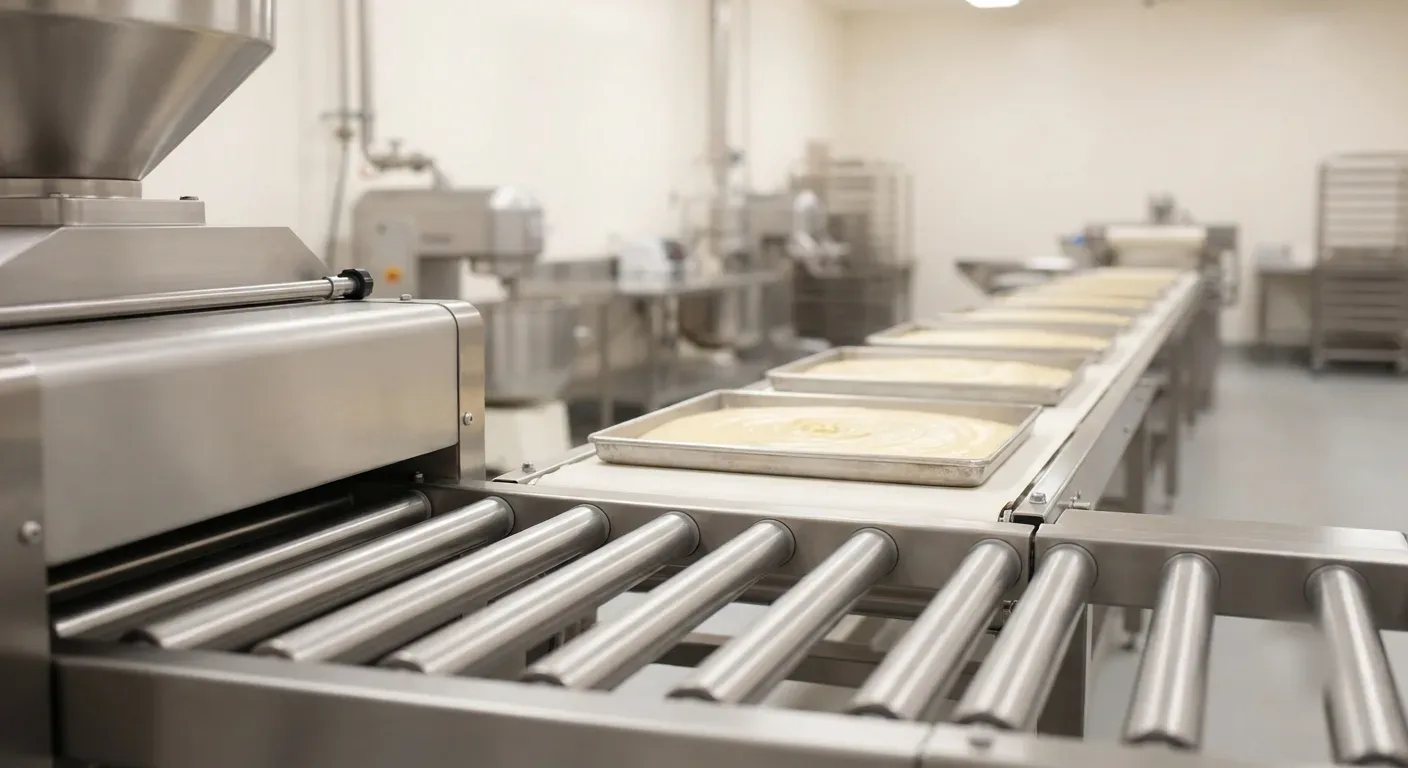
- Smaller-Volume Operations: Shell eggs are practical when cracking, measuring, and handling fit comfortably into the workflow.
- Higher-Volume Production: Liquid eggs remove the cracking and handling that grow with every extra tray, so batching is faster.
- Recipes That Need Separate Yolks or Whites: Liquid egg yolk and liquid egg white remove the separation step, and the pooled raw egg that comes with it.
- Standardised Production: Liquid formats deliver the same measured quantity in every batch.
The American Egg Board puts the trade-off plainly: egg products save on labour, storage, and portion control while matching shell eggs in nutritional value and most functional properties.
Before choosing, it is worth mapping where eggs enter your process and how much time goes into handling them.
Liquid and Dried Egg Formats and Their Applications
Liquid egg products are available in different formats, depending on which part of the egg a production process requires. Each format offers different functional properties and is suited to specific food applications.
The choice of format depends on the functional properties required, the production process, storage conditions, and the final product. Whole egg formats provide both yolk and white, while egg white and egg yolk products allow manufacturers to use specific egg components based on their formulation requirements.
Whole egg powder can be suitable for dry mixes and applications where a powdered ingredient offers greater convenience in storage and handling. Egg powder is a dried egg format rather than a liquid egg product, and it suits applications where a dry ingredient is required.
| Egg Format | Applications |
|---|---|
| Whole Egg Liquid | Cakes, pastries, pancakes, mayonnaise, sauces, baked goods, and other products requiring both egg white and yolk |
| Egg White Liquid | Meringues, angel food cakes, protein-rich products, foams, and applications where egg whites are required without the yolk |
| Egg Yolk Liquid | Mayonnaise, custards, sauces, dressings, bakery products, and applications requiring the emulsifying properties of egg yolk |
| Whole Egg Powder | Cakes, bakery mixes, pancakes, prepared foods, and dry formulations where a shelf-stable egg ingredient is preferred |
Liquid Eggs vs Shell Eggs by Application
The right egg format can also depend on what you are making. Different food applications may require different levels of convenience, consistency, separation, and handling. Here's how the two formats compare across some of the most common commercial food applications:
| Application | Shell Eggs | Liquid Eggs |
|---|---|---|
| Bakery Products | Requires cracking and measuring before use | Easy to measure and incorporate into large batches |
| Mayonnaise & Sauces | Requires cracking and yolk separation | Liquid yolk can be used directly for emulsification |
| Confectionery | Requires manual cracking and separation | Whole egg, yolk, or white can be selected based on the formulation |
| Ready-to-Eat Foods | More preparation before production | Simplifies handling in standardised recipes |
| Pasta & Noodles | Requires cracking and measuring during preparation | Simplifies measuring and handling in high-volume production |
| Restaurants & Catering | Practical for smaller quantities | Useful when higher volumes require faster preparation |
| Large-Scale Manufacturing | More handling as production volumes increase | Supports streamlined and repeatable production |
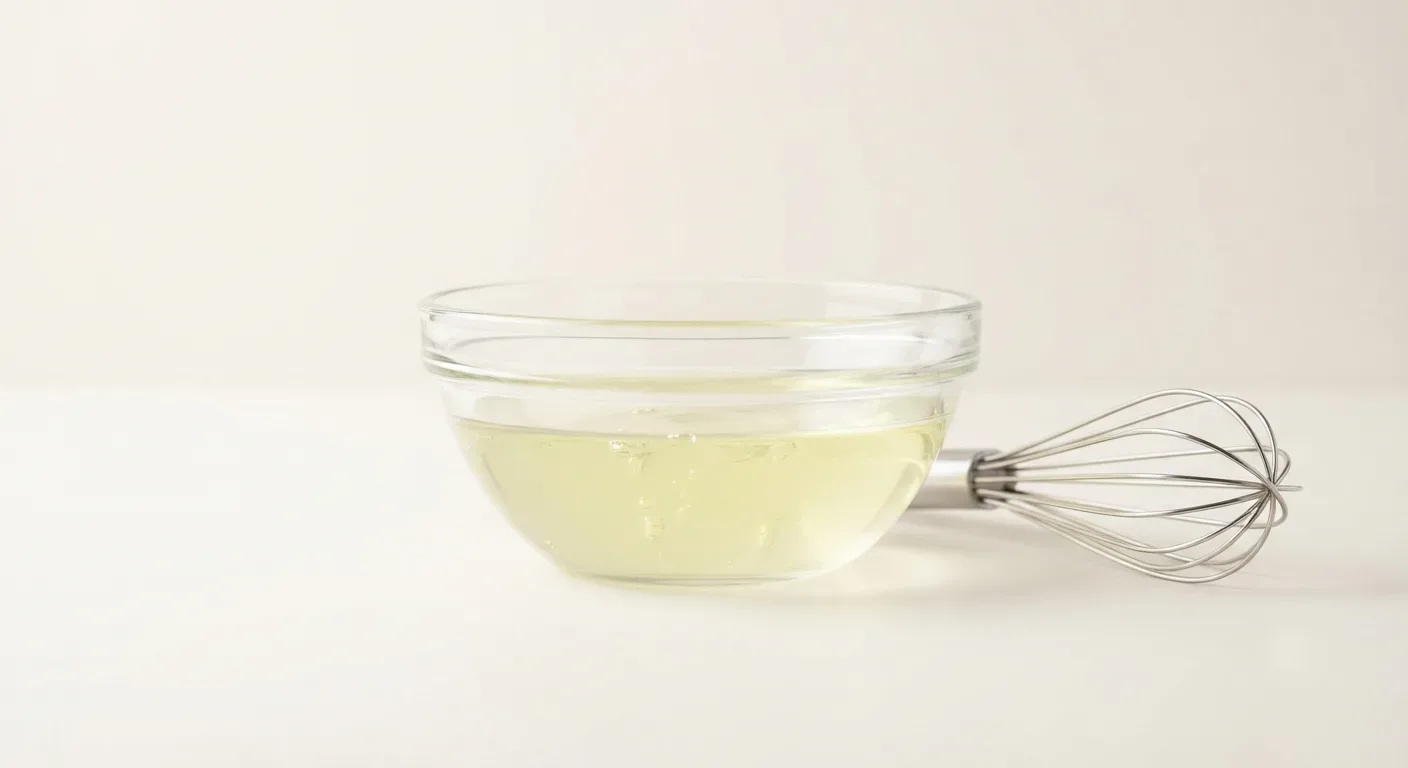
For applications where eggs are used in large quantities, the format can make a noticeable difference to the production workflow.
A bakery producing large batches, for example, may benefit from liquid whole egg that can be measured and added directly. A sauce manufacturer may require liquid egg yolk for emulsification, while a dry-mix manufacturer may prefer an egg powder.
The application should therefore guide the choice of egg format, rather than treating liquid eggs and shell eggs as interchangeable in every situation.
How to Choose the Right Egg Format for Your Business
Choosing between liquid eggs and shell eggs starts with understanding how eggs fit into your production process. The right format depends on more than just the type of product you make.
Production volume, storage facilities, labour requirements, consistency, and supply needs can all further influence the decision. Here are some factors to consider when choosing an egg format:
| Consideration | What To Look For |
|---|---|
| Production Volume | How much egg your business uses regularly |
| Handling | How much manual preparation your process involves |
| Consistency | Whether you need uniform quantities across batches |
| Storage | The storage space and conditions available |
| Labour | The time and effort required to handle eggs |
| Application and Scalability | The egg format your products need and whether your requirements may grow |
Ultimately, the right egg format is the one that fits smoothly into your existing production process. For some businesses, shell eggs may be sufficient, while others may benefit from the convenience and consistency of liquid or powdered egg products.
Looking at your production volume, application, storage, and handling requirements can help you choose an egg format that supports efficient, consistent, and scalable operations.
Which Egg Format Fits Your Business?
Think about your production process and choose the format that best matches your requirements.
| Business Requirement | Suitable Egg Format |
|---|---|
| You use eggs in smaller quantities and cracking is manageable | Shell eggs |
| You want to reduce cracking, separating, and measuring | Whole Egg Liquid |
| Your recipes need egg whites on their own | Egg White Liquid |
| Your recipes need egg yolks on their own | Egg Yolk Liquid |
| You need consistent quantities for large-batch production | Liquid egg products |
| You need a dry ingredient that is easy to store and incorporate | Whole Egg Powder |
Conclusion
When choosing between liquid eggs and shell eggs, there is no single format that is right for every business. Shell eggs can be practical for lower-volume operations where cracking and preparation are manageable, while liquid egg products simplify handling and portioning in higher-volume or standardised production.
The right choice depends on the application, production volume, storage setup, and workflow. Businesses that need a specific egg component can also choose between liquid whole egg, egg white, egg yolk, or egg powder based on their formulation.
Why Choose CookADoo?
Choosing the right egg format is only the first step. For food businesses, ingredient quality, consistency, and reliability also matter.
CookADoo offers processed egg solutions for commercial food applications:
- Whole Egg Liquid: Suitable for products such as bakery items, sauces, and prepared foods where whole egg functionality is required.
- Egg White Liquid: Ideal for applications requiring egg white, including bakery products, desserts, and food preparations.
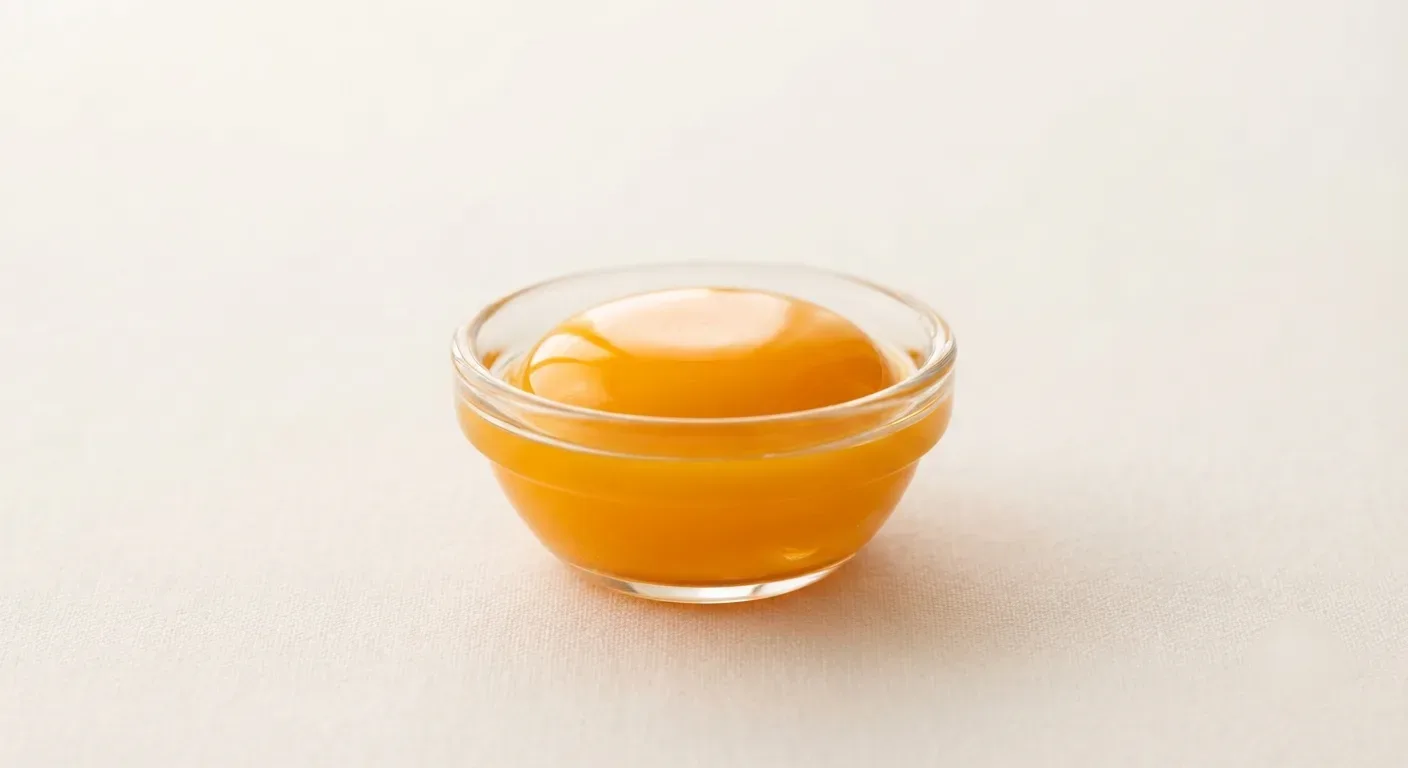
- Egg Yolk Liquid: Suitable for products such as mayonnaise, sauces, dressings, and other applications requiring egg yolk.
- Whole Egg Powder: A convenient option for baking, mayonnaise, pancakes, pastries, and other food manufacturing applications.
These formats help businesses simplify egg handling while supporting consistency across production batches.
Every format is produced under FSSC 22000, BRCGS, ISO 22000, and Halal certification, with batch traceability from farm to finished product.
Whether you operate a bakery, café, hotel, cloud kitchen, or food manufacturing facility, CookADoo offers egg solutions suited to different commercial requirements.
Ready to Rethink How You Handle Eggs?
Cracking, separating, measuring, cleaning up. A lot happens to an egg before production even begins.
CookADoo's liquid and powdered egg products take those steps off the line while keeping quality consistent from batch to batch.
Explore the range of liquid and powdered egg products, or request a sample kit and try one format on one recipe.
Frequently Asked Questions
What is the difference between liquid eggs and shell eggs?
Shell eggs are supplied in their natural shell, while liquid eggs are removed from the shell and supplied as whole egg, egg white, or egg yolk.
Are liquid eggs better than shell eggs?
It depends on the application, production volume, and workflow. Shell eggs can suit smaller operations, while liquid eggs are often more practical for high-volume production, consistent portioning, and streamlined handling.
Are commercial liquid eggs pasteurised?
Yes, in regulated markets. FSSAI's standard defines a liquid egg product as pasteurised, and US law requires every liquid, frozen, or dried egg product to be pasteurised. Check the product specification for the treatment used and the shelf life.
How long do liquid eggs last?
Shelf life varies by product, packaging, and storage conditions. Always follow the manufacturer's storage instructions and use-by date.
Can liquid eggs replace shell eggs?
Yes. Liquid eggs can be used in many applications, including baking, sauces, confectionery, and prepared foods. Suitability depends on the product and recipe.
Why do food manufacturers use liquid eggs?
Liquid eggs reduce shell waste, cracking, manual handling, and egg separation while making portioning and batch consistency easier.
Can liquid eggs be used in commercial baking?
Yes. Liquid whole egg, egg white, and egg yolk are used across commercial baking, from cakes and sponges to meringues, custards, and glazes, and because they are measured by weight they suit batch recipes.
What is the difference between liquid whole egg, egg white, and egg yolk?
Liquid whole egg contains both white and yolk. Liquid egg white is the albumen on its own, used where foaming and structure matter. Liquid egg yolk is the yolk on its own, used where emulsification and richness matter.
When should a business choose egg powder instead of liquid eggs?
When a dry ingredient fits the process better: dry mixes, long ambient storage, or sites without dependable cold storage. Egg powder is a dried egg product rather than a liquid one and is reconstituted with water before use.
Sources
- U.S. Department of Agriculture, Food Safety and Inspection Service: Egg Products and Food Safety
- U.S. Department of Agriculture, Food Safety and Inspection Service: Shell Eggs from Farm to Table
- U.S. Food and Drug Administration: What You Need to Know About Egg Safety
- Food Safety and Standards Authority of India: Food Product Standards, Chapter 2.5.3, Egg and Egg Products
- UK Food Standards Agency: Advice on Safe Storage, Handling and Use of Eggs for Catering
- American Egg Board: Conversion to Egg Products