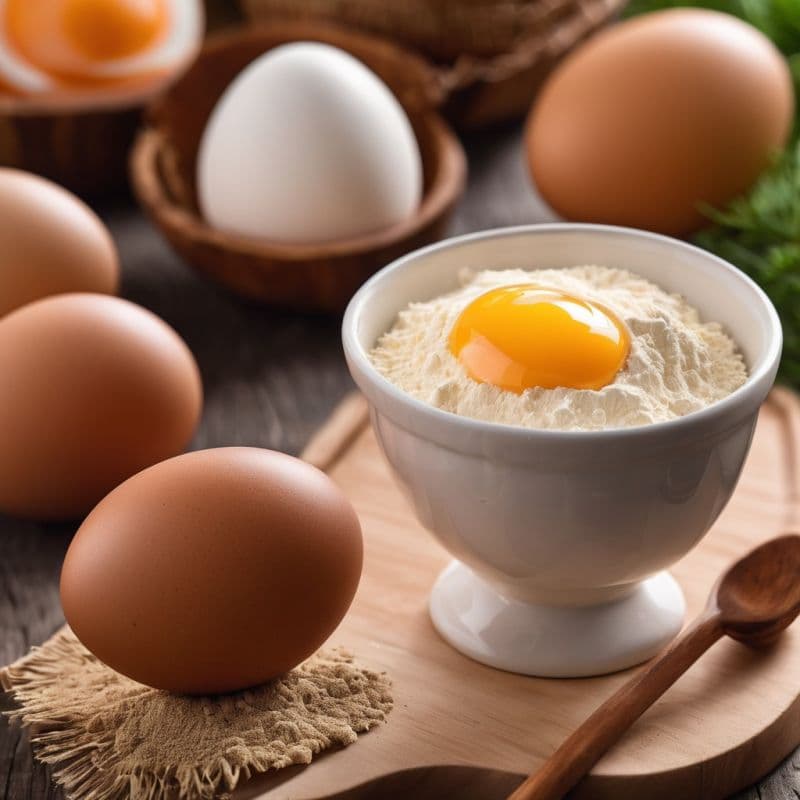
Private label egg products — powders, liquids, or specialty ingredients like eggshell collagen — let distributors and brands enter a category without building manufacturing infrastructure. But the partner you choose determines whether that's a smooth process or a recurring headache.
Private Label vs OEM vs White Label — What's the Difference?
These terms get used loosely, so it's worth being precise:
- Private label — the manufacturer produces to their own standard formulation, packaged and branded as yours.
- OEM (Original Equipment Manufacturer) — the manufacturer produces to your specification sheet, which may differ from their standard product.
- White label — unbranded bulk product you resell or repack under your own identity, without necessarily requiring custom formulation.
Knowing which of these you actually need changes what to ask a potential manufacturing partner.
What to Evaluate in a Manufacturing Partner
- Certifications. At minimum, look for FSSC 22000 or BRCGS (GFSI-benchmarked), plus Halal and FSSAI/local equivalents if relevant to your target market. If you're launching a branded product, your own name is now attached to their food safety record.
- Specification flexibility. Can they formulate against your target spec sheet (moisture, protein, particle size), or only offer their existing standard grades? This matters most for OEM relationships specifically.
- Packaging capability. Bulk export formats (bags, BIB/pails, IBC totes) are standard — but can they also produce retail-ready pouches, cartons, and custom labels formatted for your market's requirements?
- MOQ for custom runs. Standard product MOQs (often 100kg liquids / 500kg powders) may not apply once custom packaging and branding enter the picture — expect a higher minimum for first-time private label runs, and get that number in writing early.
- Documentation support. If you're distributing internationally, you need a partner who prepares COA, Certificate of Origin, Phytosanitary, and Halal documentation in-house, formatted for your destination market.
Typical Timeline
Standard production lead time for stock grades is often 7–15 days from order confirmation. For a first-time private label order, budget an additional 1–2 weeks for packaging artwork approval and any production tooling setup — this is usually the longest lead-time variable, not the manufacturing itself.
Questions to Ask Before You Commit
- Can I get a small trial run before committing to a full private label production batch?
- What exactly changes in cost and lead time between your standard product and a custom private label version?
- Who owns the formulation if I want to move manufacturers later?
- What's your process if a batch doesn't meet spec — reprocessing, credit, or replacement?
The Bottom Line
A good private label or OEM partner should feel less like a vendor and more like a manufacturing extension of your own brand — transparent about specification, cost drivers, and timelines. If a potential partner is vague on any of the above, that's worth treating as a warning sign before you commit volume.