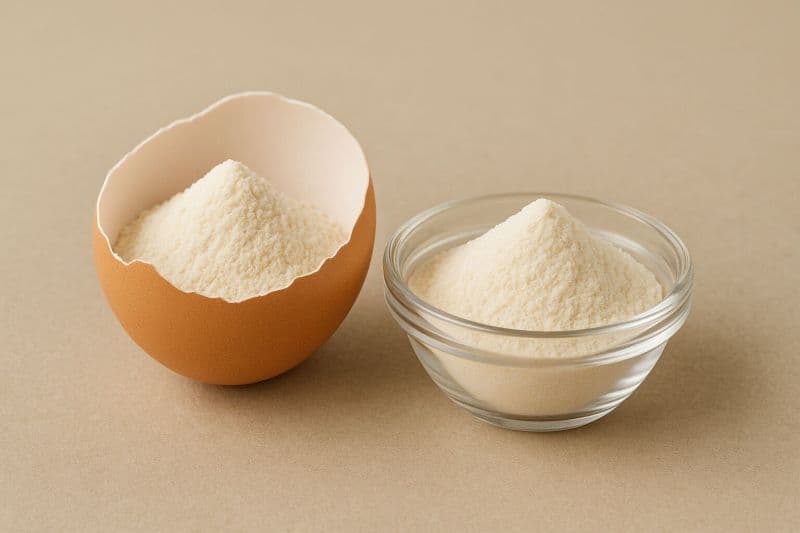
"How long does egg powder last?" comes up in nearly every first conversation with a new buyer — and the honest answer is: it depends on which egg powder, how it's packaged, and how it's stored. Here's the breakdown.
The Baseline: Ambient Shelf Life
Properly processed, packaged spray-dried egg powder — whole egg, yolk, or albumen — typically carries a 6+ month ambient shelf life from production date, stored under reasonable conditions (cool, dry, sealed). This is the standard baseline most suppliers quote, and it's what makes powder practical for long-distance export and extended inventory planning.
What Actually Determines Shelf Life
- Moisture content at packaging. Lower residual moisture means less room for microbial or oxidative degradation over time. This is controlled during spray drying, not something you can affect post-purchase.
- Packaging barrier. Multi-wall paper bags with a PE (polyethylene) liner protect against moisture ingress better than simple paper packaging. Ask what your specific SKU is packaged in.
- Fat content. Whole egg and yolk powders contain natural fats, which are more susceptible to oxidation over time than albumen (egg white) powder, which is essentially fat-free. Albumen powder generally holds its functional properties longer under the same conditions.
- Storage conditions after receiving. This is the variable most within your control — cool, dry, sealed, and away from temperature cycling.
Shelf Life vs Functional Performance
It's worth distinguishing two different things: microbiological safety and functional performance. A properly stored, sealed egg powder is unlikely to become unsafe within its shelf life window — but functional properties like solubility, emulsification strength, and foaming capacity can gradually decline before that date, especially if storage conditions weren't ideal or the package has been opened and resealed repeatedly.
Planning Inventory Around Shelf Life
- Request the specific shelf life and production date (not just a generic figure) on your COA for each batch — this should be standard documentation from any serious supplier.
- Use FIFO (first in, first out) rotation for warehoused stock.
- If you're holding safety stock for supply continuity, egg powder's 6+ month ambient window makes it far more forgiving than liquid egg, which requires continuous cold-chain and a much shorter use window.
- For international buyers, factor production lead time (often 7–15 days) plus transit time (5–30 days depending on destination) into how much of that shelf life window you'll actually have on arrival — and ask your supplier for the production date, not just the order date.
The Bottom Line
Egg powder's shelf life advantage over fresh or liquid egg is real and significant, but it's a starting point, not a guarantee — packaging quality and post-receipt storage still determine whether you get the full window. Ask your supplier for batch-specific shelf life data, and pair it with proper warehouse storage practices to get the most out of it.