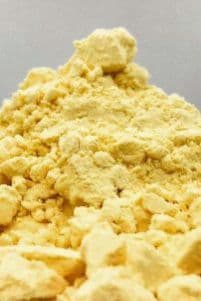
"Egg powder" isn't one product — it's a category. Before you request a quote, it helps to work through a simple framework: what function does egg serve in your formulation, and which format and grade actually deliver it.
Step 1: What Function Do You Need?
Egg contributes different things depending on which part you use:
- Whole egg — structure, moisture, emulsification, and protein, all together. Good for bakery items where you want the full functional profile in one ingredient.
- Egg yolk — concentrated emulsification and richness, plus natural color from carotenoids. Used where fat-binding and mouthfeel matter (sauces, mayonnaise, custards).
- Egg albumen (white) — protein and foaming/aeration, with none of the fat. Used where structure and lift matter more than richness (meringues, protein products, confectionery aeration).
- Egg shell — a source of natural calcium carbonate, unrelated to the egg's culinary function. Used in mineral supplements and fortified foods.
Step 2: Powder or Liquid?
Once you know which part of the egg you need, decide on format:
- Powder if you need ambient shelf life, reduced cold-chain cost, and long-distance shipping without spoilage risk.
- Liquid if your process is already built around wet-ingredient dosing and you have reliable cold-chain infrastructure from receiving through use.
Step 3: Standard or Specialized Grade?
Within each product, specialized grades solve specific process problems:
- Heat-stable grades maintain function through retort or high-heat processing — standard grades can break down.
- Free-flow grades resist clumping for automated dosing lines.
- Desugared grades prevent Maillard browning in high-heat applications.
- Enriched grades add nutritional density for functional food or infant/health-focused products.
- Cage-free/free-range grades support ethical sourcing claims and CSR/retail compliance requirements, particularly for EU and UK buyers.
Step 4: Certification Requirements for Your Market
Your destination market often dictates which certifications matter most:
- Halal certification is effectively mandatory for the Middle East, Southeast Asia, and parts of Africa.
- BRCGS and FSSC 22000 are prerequisites for most EU and UK retail supply chains.
- Full COA documentation (microbiological, chemical, sensory) is typically expected by Japanese and Korean buyers.
Step 5: Qualify Before You Commit
Before scaling to full container volumes, run a trial order — most reputable suppliers offer a meaningfully lower minimum for first orders (100kg for liquids, 500kg for powders is a common industry baseline) specifically so buyers can validate the ingredient in their own formulation before committing further.
Putting It Together
A useful way to frame your RFQ: "I need [whole egg/yolk/albumen/shell], in [powder/liquid], with [standard/heat-stable/free-flow/desugared/enriched/cage-free] properties, certified for [your destination market]." That single sentence gets you to the right SKU faster than browsing a full catalog.